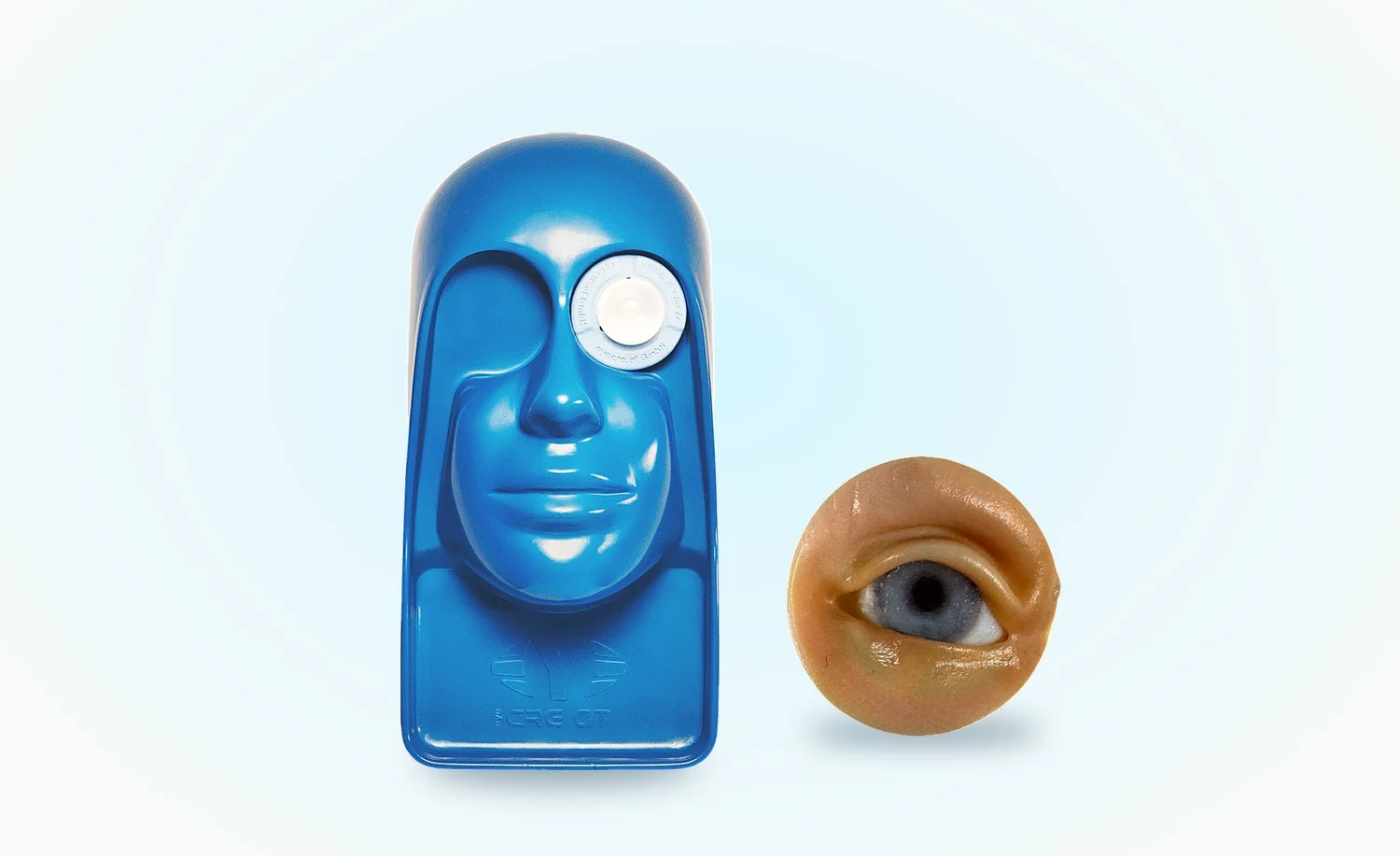
Intravitreal injection is one of the most frequent procedures in ophthalmology, and the margin for error is small. Site, angle, depth and a clean workflow have to be right every time. This guide walks through the injection step by step, shows what you can rehearse on a training eye, and helps you choose the right IVT model and holder for your programme.
This overview is for clinicians in training and is not a substitute for supervised training or local protocols. Parameters vary between drugs, guidelines and patients.
Procedure
The intravitreal injection in 7 steps
-
Anaesthesia and positioning
Apply topical anaesthetic and ask the patient to look away from the planned entry site.
-
Antisepsis and speculum
Apply 5% povidone-iodine to the conjunctiva, lids and lashes, insert a sterile speculum so the needle cannot touch the lashes, and reapply povidone-iodine over the site just before injecting.
-
Mark the site
Measure with calipers: 3 to 3.5 mm behind the limbus in pseudophakic or aphakic eyes, 3.5 to 4 mm in phakic eyes. The inferotemporal quadrant is common.
-
Insert the needle
Use a 30G needle for anti-VEGF agents (27G is common for triamcinolone). Enter on a straight path aimed at the centre of the globe.
-
Inject into the mid-vitreous
Inject the dose, typically 0.05 mL, slowly and steadily, then withdraw the needle.
-
Control reflux
Place a sterile cotton swab over the entry site straight away.
-
Check perfusion and pressure
Confirm perfusion with a functional test such as counting fingers, measure the pressure when indicated, and explain the warning signs to the patient.
Children are different
In premature infants with retinopathy of prematurity, the eye is smaller and the lens relatively larger. The German ophthalmology society recommends injecting 1.0 to 2.0 mm behind the limbus with a 30G or 31G needle, angled towards the posterior pole. The Eye 4 Pediatric IVT lets you rehearse this on child-scale anatomy.
Wetlab
What you rehearse on a training eye
- SiteMeasuring 3 to 4 mm with calipers, every time
- Angle and depthA straight path to the mid-vitreous
- WorkflowThe aseptic sequence from drops to swab
- VolumeSlow, steady injection of a defined dose
Models
Which IVT model is right for you?
All four models are made in Austria and fit both the Pad 4 Eyes and the Head 4 Eyes holder.
| Model | Best for | Price per eye | Pack |
|---|---|---|---|
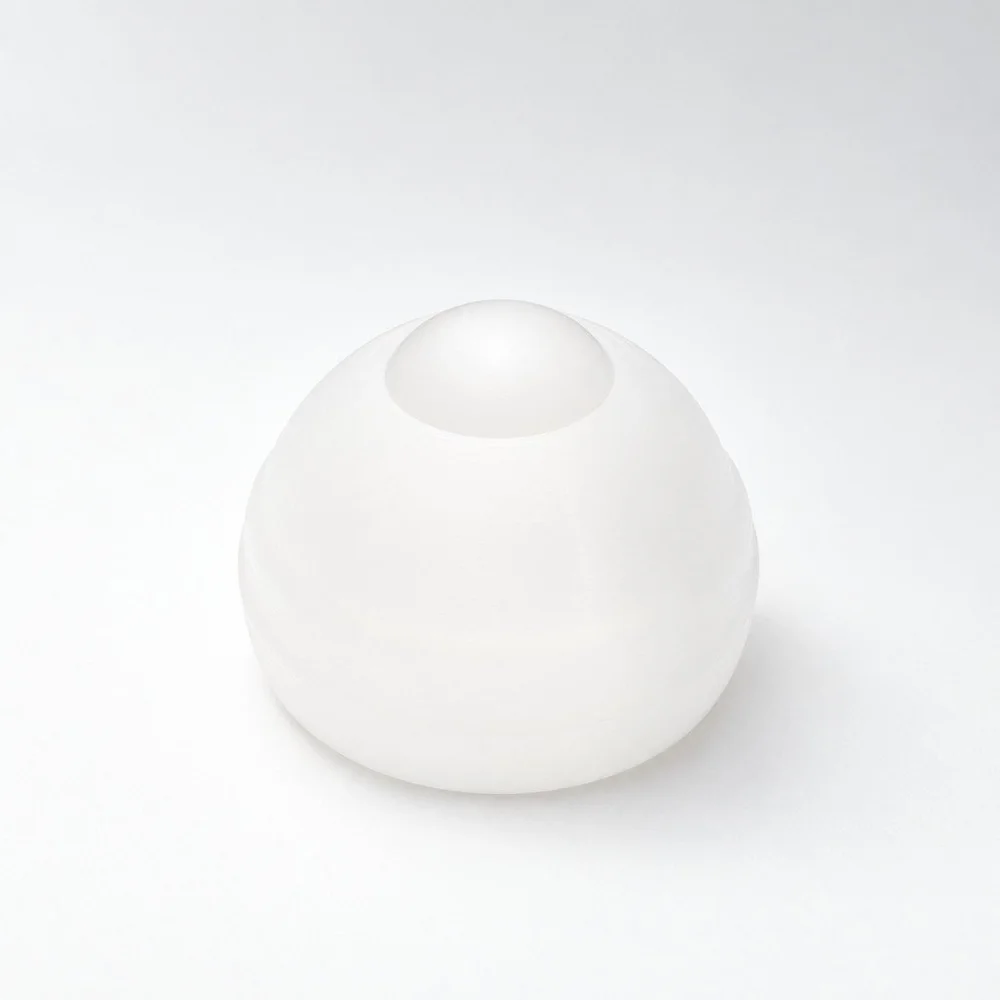
| Eye 4 IntraVitreal Injection | Core IVT practice, high volume | EUR 50 | 12 |
| Eye 4 Pediatric IVT | Child-scale anatomy, ROP and paediatric anti-VEGF | EUR 55 | 12 |
| Eye 4 Demonstration and IVT | Showing the procedure, static demo eye | EUR 75 | 6 |
| Eye 4 Dynamic Demonstration | Live demos at congresses and pharma events | EUR 99 | 6 |
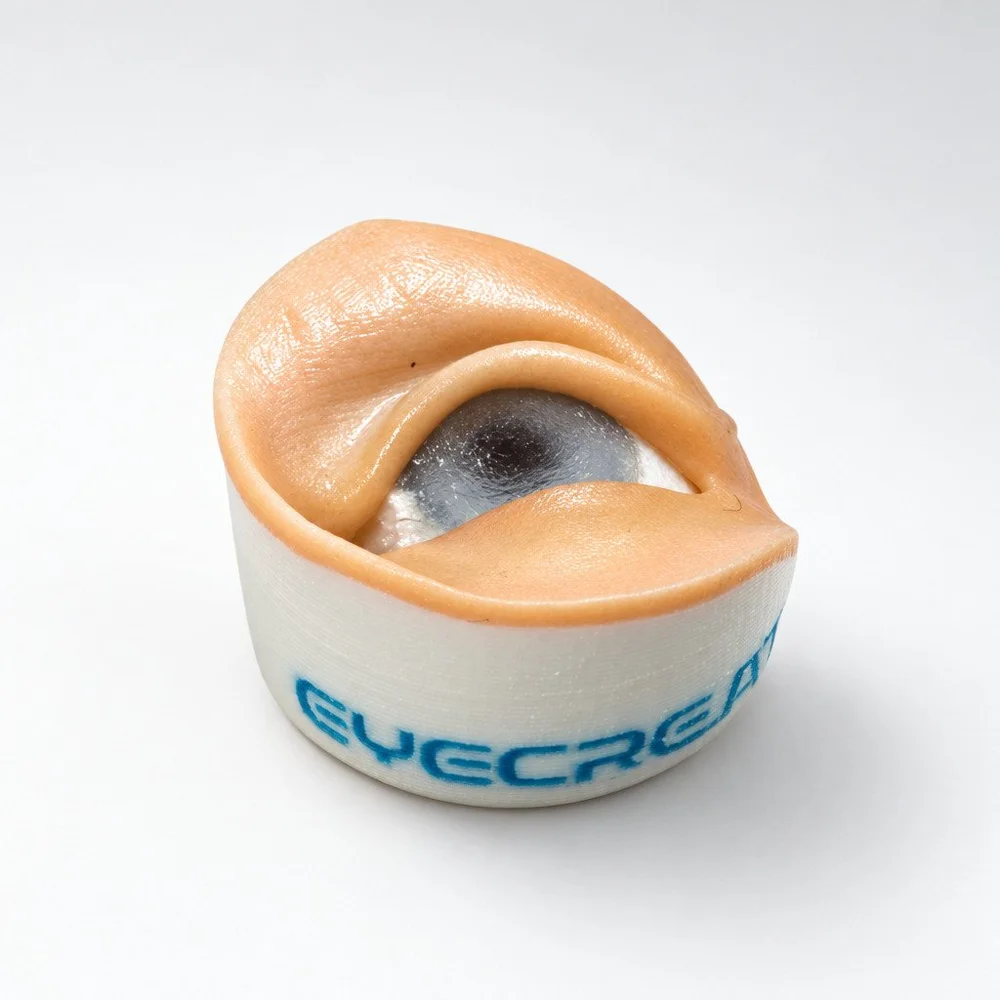
Eye 4 Demonstration and IVT
Open-bottom demo eye to show the injection path.
EUR 75 per eye View in store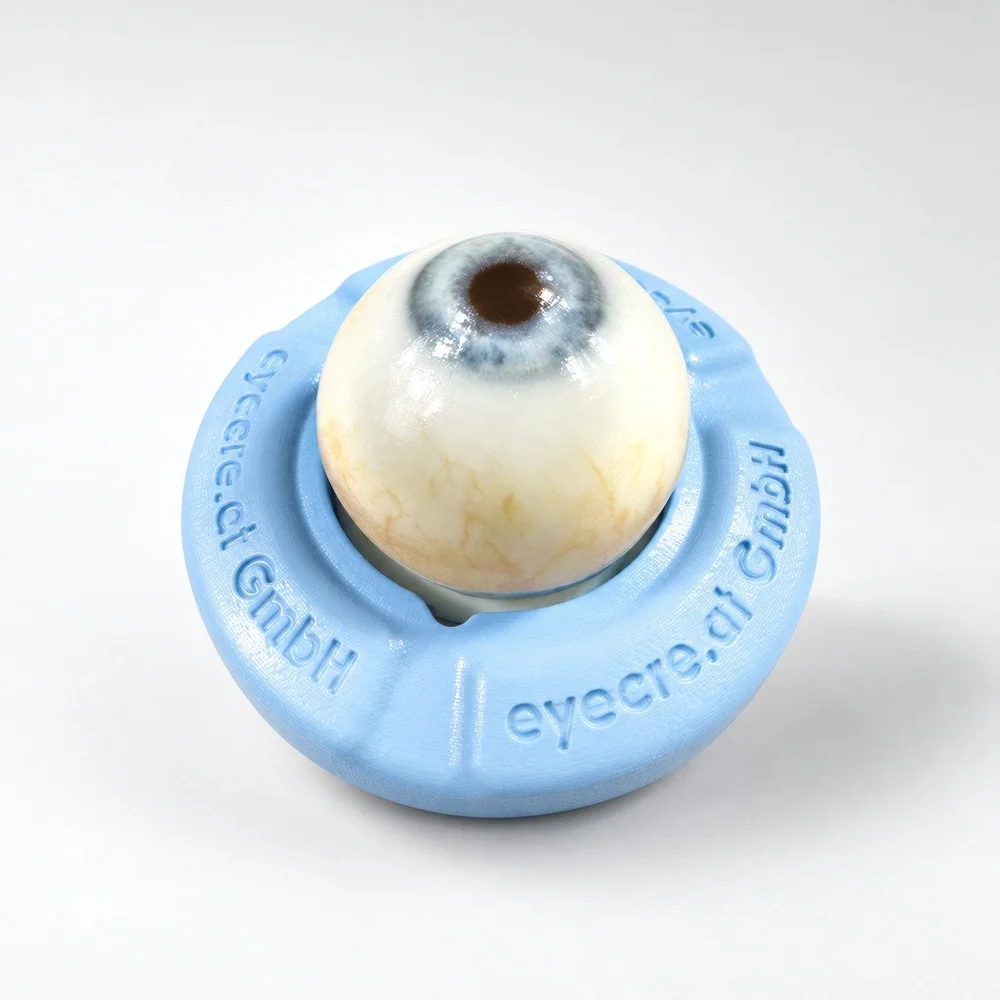
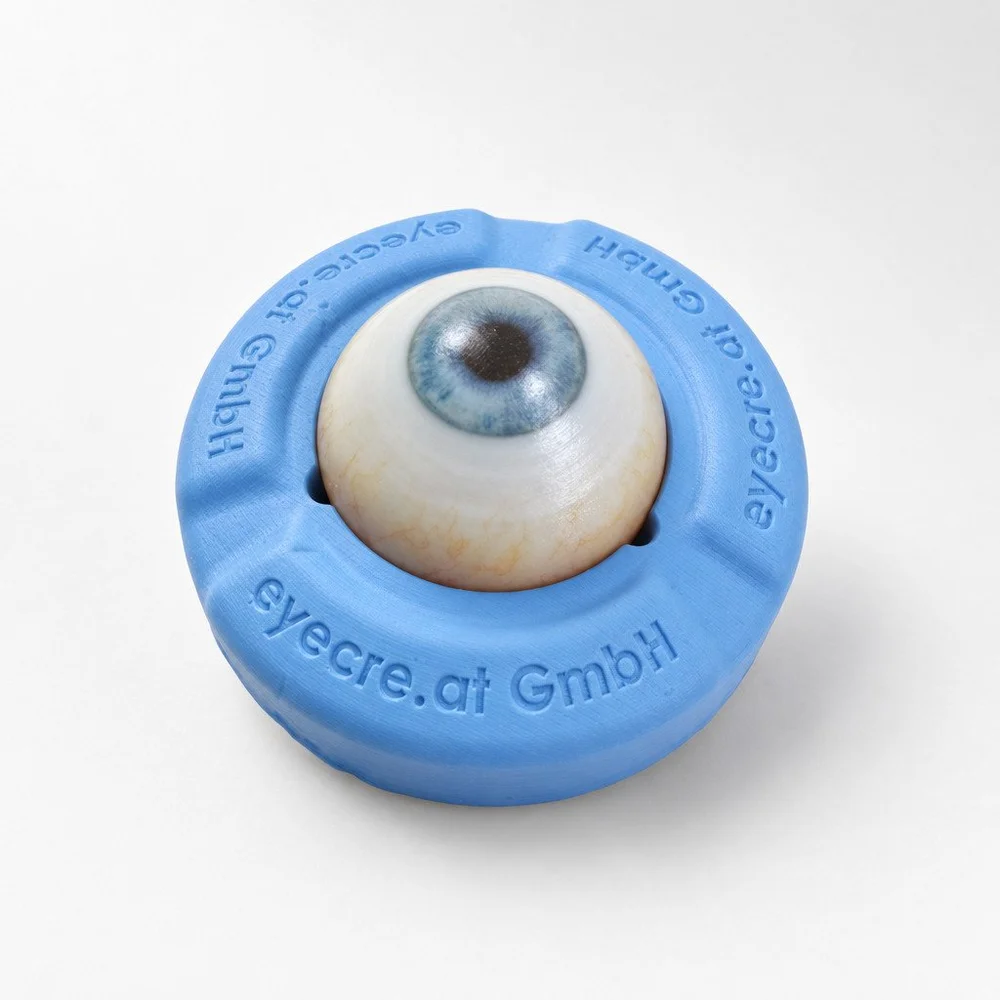
Eye 4 Dynamic Demonstration
Visualises the injection in real time for live audiences.
EUR 99 per eye View in storeSetup
Complete your setup with a holder
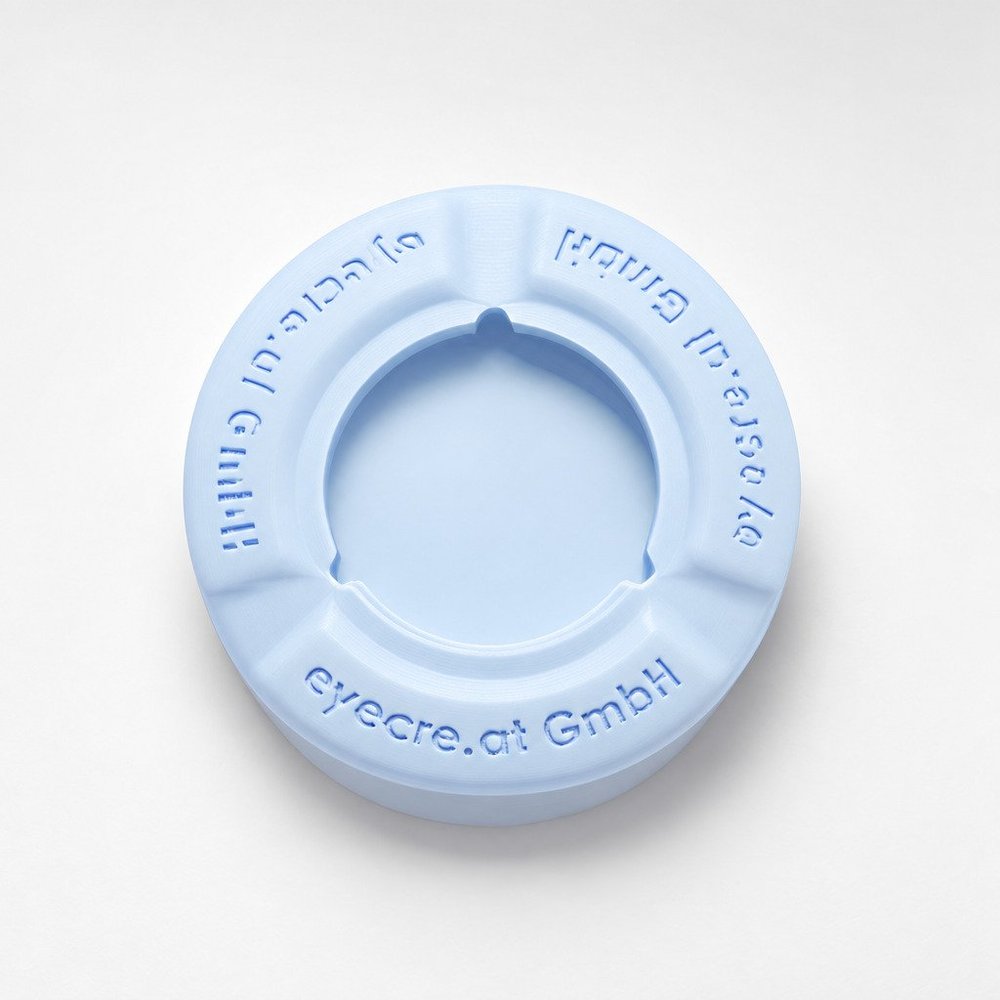
Pad 4 Eyes
Soft silicone tabletop holder. The simplest way to set up one or several stations.
EUR 92.40 set of four View in store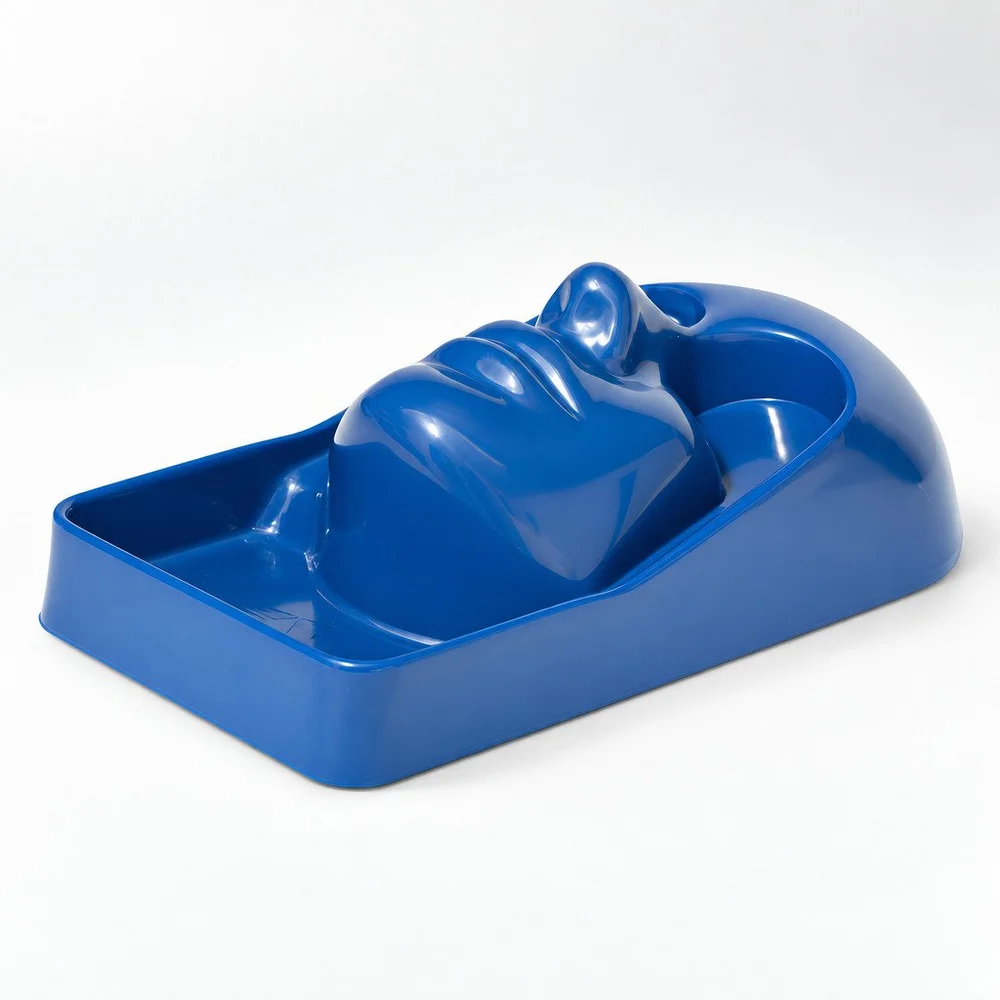
Head 4 Eyes
Patient-like head for realistic positioning, the choice for training centres and congress wetlabs.
EUR 379.90 View in storeWatch
IVT training in action
Partners
Branded IVT kits for pharma and medtech
For anti-VEGF education programmes, launches and congress booths we develop custom and white-label IVT solutions under your brand. Read how custom development works.
FAQ
Frequently asked questions
Where is an intravitreal injection given?
In adults usually 3 to 3.5 mm behind the limbus in pseudophakic eyes and 3.5 to 4 mm in phakic eyes, often in the inferotemporal quadrant.
Which needle size is used for intravitreal injections?
Commonly a 30G needle for anti-VEGF agents and a 27G needle for triamcinolone.
How is IVT different in premature infants?
Guidelines for retinopathy of prematurity recommend injecting 1.0 to 2.0 mm behind the limbus, angled towards the posterior pole. The Eye 4 Pediatric IVT reproduces child-scale anatomy for practice.
Which IVT model should a residency programme start with?
The Eye 4 IntraVitreal Injection at EUR 50 per eye. It is closed and fluid-filled and built for high-volume, repetition-based training.
Do the IVT models need a holder?
Yes. All models fit the Pad 4 Eyes silicone holder and the Head 4 Eyes head holder.
Find the right IVT setup
Ask Vitreo which eye and holder fit your programme and budget.
Keep learning
Related guides
Vitrectomy wetlab training
The seven PPV steps, mapped to your wetlab.
BlogCustom training models
How we develop OEM and white-label models with you.
BlogThe Yamane technique step by step
Six steps, IOL choice and pitfalls of flanged IOL fixation.
BlogPhaco training for beginners
Four phaco training systems compared by cost per run.
- How to Give Intravitreal Injections, AAO EyeNet
- Anti-VEGF therapy in children (ROP), German Ophthalmological Society
- IVT training guide, eyecre.at
We change the world eye per eye at a time. David Ortner, CEO
Not for medical or human use, non-sterile and only for demonstration. All eyecre.at products are artificial training and demonstration equipment. Made in Austria.