

Training Hub · Real Tissue
Train on Real Tissue
Real tissue is still the gold standard for many procedures. Artificial eyes give you unlimited, standardised repetitions; real tissue gives you the authentic feel of cutting, suturing and handling living-like structures. Most serious wetlabs use both. This guide is about doing the real-tissue side properly: sourcing, preparation, fixation and the complete equipment system, made in Austria since 2014.
Handling the eyes, step by step
From abattoir to holder
-
1
Sourcing porcine eyes
Porcine eyes are a by-product of the food industry, usually available from a local abattoir. Make sure the eyes are removed before the carcass is scalded, because scalding detaches the cornea and ruins the eye for training. A pig of around six months gives the most human-like anatomy; sheep or cow eyes work too, but are anatomically less close. Don't know where to look? See sourcing support below.
-
2
Storage & freshness
Always store the eyes submerged in liquid, ideally BSS (balanced salt solution). Keep them as cold as possible but do not freeze. With good storage, plan the session by the deepest structure you want to reach:
3 days working in the vitreous / posterior segment4 days working in the anterior chamber5 days working on the cornea only -
3
Preparation
Bring the eye to at least room temperature before operating, because cold tissue is stiffer. Storage in liquid makes the tissue take up water and swell slightly; for corneal procedures, treating the eye with glycerin beforehand draws that water back out.
Pro tip: with a careful touch and a microwave, you can induce a cataract in the lens for practice. It takes plenty of trial and error, but it works. -
4
Fixation & positioning
Fix the globe with the Vacuum Holder 4 Pigs, Set Pad 4 Pigs or Pins for Fixation, and position it with Head 4 Eyes: a stable, repeatable set-up so you spend time practising, not improvising.
-
5
Hygiene, safety & disposal
Wear gloves and eye protection, work on a disinfectable surface and treat all material as biological waste. Clean and disinfect tools and holders after each session, and dispose of tissue in line with your local biological-waste regulations.
-
6
Human donor eyes
Human eyes are obtained only through an eye bank or an authorised institution, with proper donor consent and documentation. They are not sourced commercially like porcine eyes. Follow the cold-chain and time-window protocol of the supplying eye bank, treat human tissue as potentially infectious (full PPE, your institution's biosafety level) and dispose of it as clinical / biohazard waste. The same fixation range works with human globes.
Ethics & regulation: use of human donor tissue for training requires consent, ethical approval and compliance with local law. Confirm the framework that applies to you.
Sourcing support
Don't know where to get eyes?
We build the equipment, not the tissue: we don't ship eyes ourselves. But after a decade of equipping real-tissue wetlabs we know where to look: abattoirs that supply wetlab-grade porcine eyes, and eye banks that release donor tissue not suitable for transplantation for training and research. We're happy to share our contacts and practical tips for your region. Just tell us where you are.
Ask us for sourcing contacts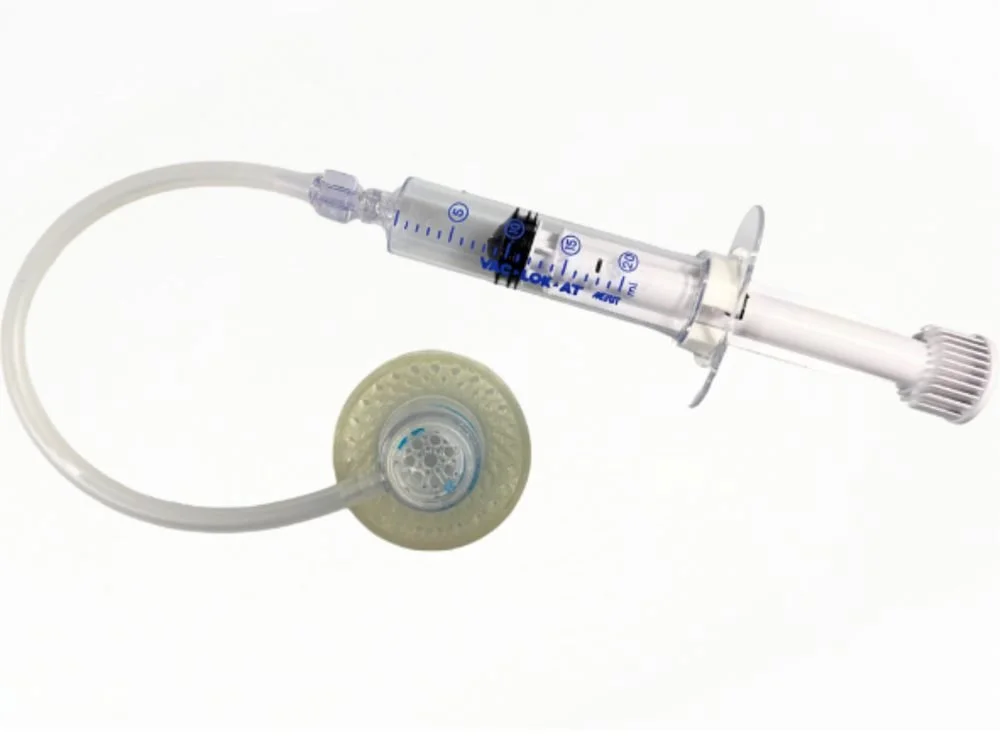
Which product for what
The real-tissue system at a glance
Prices load live from our store. What you see here is what you pay at checkout.
| Product | Best for | Pack | Pack price | Per eye |
|---|
Complete your bench
Cut, grasp and suture without opening sterile stock
Practice-grade knives, blades, forceps and scalpels made for the wetlab. Reusable instruments and affordable single-use knives keep your sterile OR products for the operating theatre. Prices load live from the store.
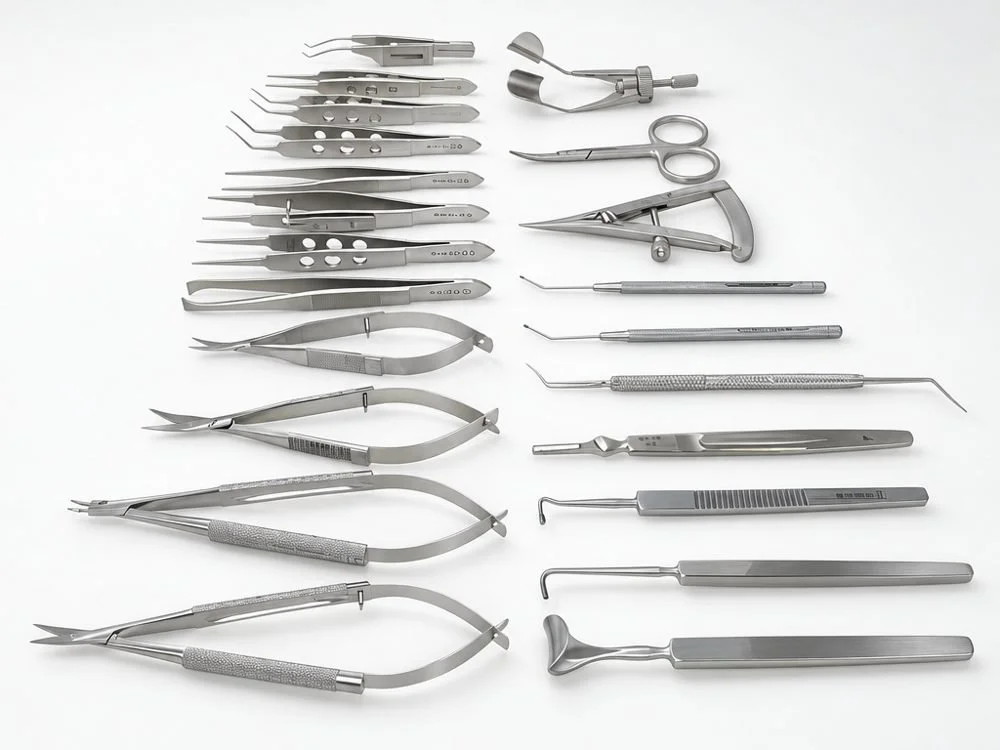
Instruments & knives
Forceps & graspers
View all →Scissors
View all →Hooks, spatulas & manipulators
View all →Speculums, retractors, calipers & markers
View all →Knives
View all →Scalpels & blades
View all →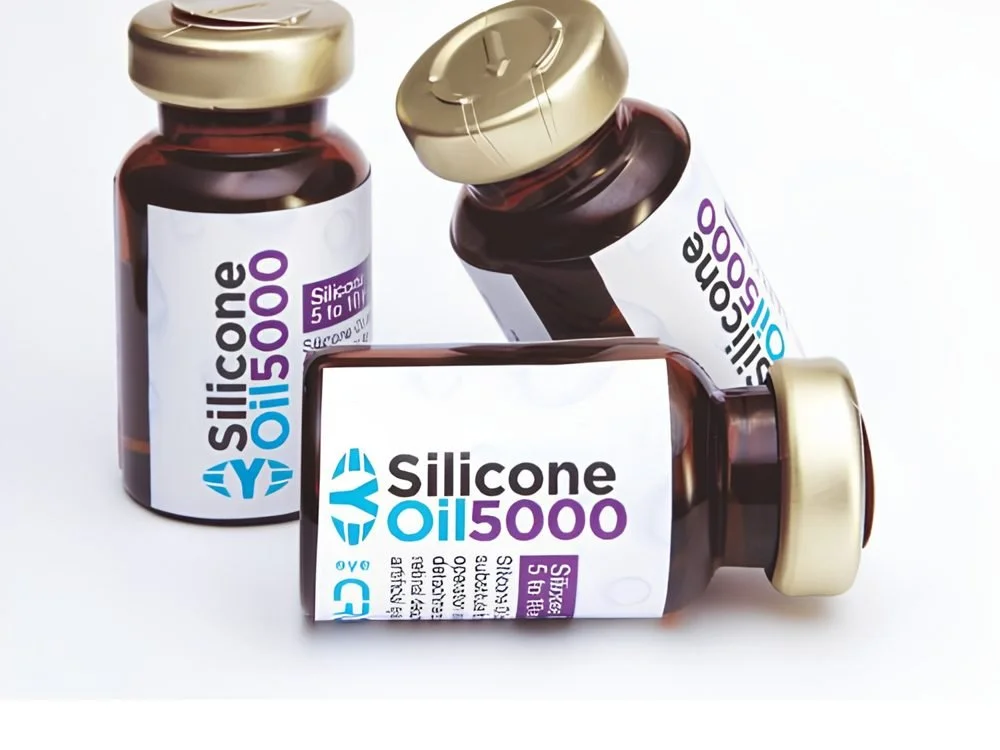
Practice liquids
OVD, heavy liquid, silicone oil, vitreous gel and staining dyes: practice-grade substitutes for the expensive sterile products you'd otherwise use up in training. Same handling, a fraction of the cost.
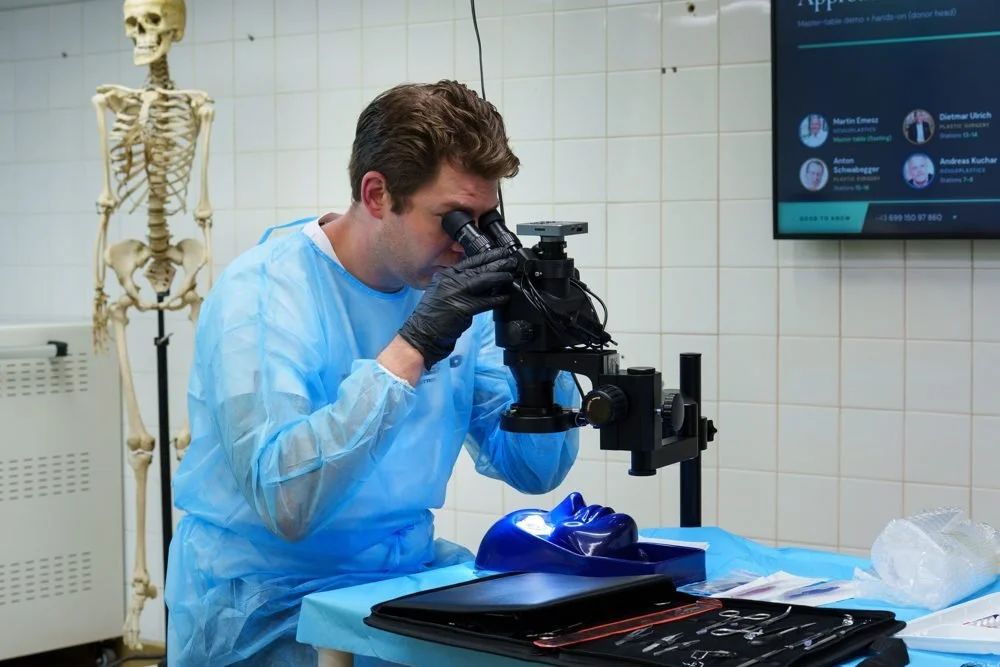
Recording & diagnostics
Recommended setups
Three ways to start
Starter fixation
Vacuum Holder 4 Pigs plus Set Pad 4 Pigs: stable, repeatable fixation for porcine and human eyes at any desk.
from €273.30
Vacuum Holder 4 Pigs → Set Pad 4 Pigs →Kit 4 Pigs
A ready-made bundle to kickstart your wetlab with porcine or human eyes, no sourcing of individual parts. Holder, pad, pins and the essentials in one box.
from €419.90
View Kit 4 Pigs →Course & wetlab scale
Holders, pads, instruments and liquids at volume pricing for courses, congress wetlabs and institutions: from 10 to 10,000+ stations, white-label included.
volume pricing
Plan your wetlab with us →Does wetlab training actually work?
Source: systematic review of 131 studies, Eye (Nature), 2020
Watch it done
Real-tissue training on video
Learn with faculty
Official courses & wetlabs
FAQ
Frequently asked questions
Where do I get porcine eyes?
Usually from a local abattoir. Porcine eyes are a food-industry by-product. Make sure the eyes are removed before the carcass is scalded; scalding detaches the cornea and ruins the eye for training.
Can you help me source eyes?
We don't ship eyes ourselves, but we're happy to share contacts: abattoirs for porcine eyes, and eye bank contacts for donor tissue that is not suitable for transplantation but can be released for training. Availability always depends on local regulations, donor consent and the source's policies. The agreement is yours to make with them. Get in touch and tell us your region.
How long do the eyes stay usable?
With good storage (submerged in BSS, as cold as possible, not frozen), a rule of thumb is about 3 days for vitreous / posterior work, 4 days for the anterior chamber and 5 days for corneal work. Human eyes follow the eye bank's protocol.
Can I use sheep or cow eyes instead?
Yes, but they are anatomically less similar to the human eye. A pig of around six months is the closest match.
The cornea looks swollen. What can I do?
Storage in liquid makes the tissue take up water and swell slightly. Treating the eye with glycerin before the procedure draws that water back out. Also let the eye reach room temperature first, because cold tissue is stiffer to work with.
Can I use the holders for human eyes too?
Yes. The Vacuum Holder 4 Pigs, Set Pad 4 Pigs, Pins for Fixation and Head 4 Eyes all work with human globes.
Are the instruments and holders reusable?
The instruments and holders are reusable. Clean and disinfect them after each session. Knives and blades are affordable single-use items so you never sacrifice sterile OR stock.
How do I dispose of the tissue?
Follow your local biological-waste rules for porcine tissue, and clinical / biohazard waste rules for human tissue.
Whatever the problem
Your training challenge is our daily work
Every wetlab is different: procedures, budgets, tissue preferences, scale. We solve training problems with human and animal tissue and highly realistic 3D-printed models, built on more than 20 years of hands-on experience in ophthalmic training wetlabs and 12 years of developing training solutions as an independent Austrian company, trusted by leading ophthalmic companies worldwide. If your problem isn't on this page, it has most likely been on our workbench before.
For industry & programs
Planning a real-tissue course, congress wetlab or institutional lab? We equip wetlabs at any scale, from 10 to 10,000+ stations, white-label included.